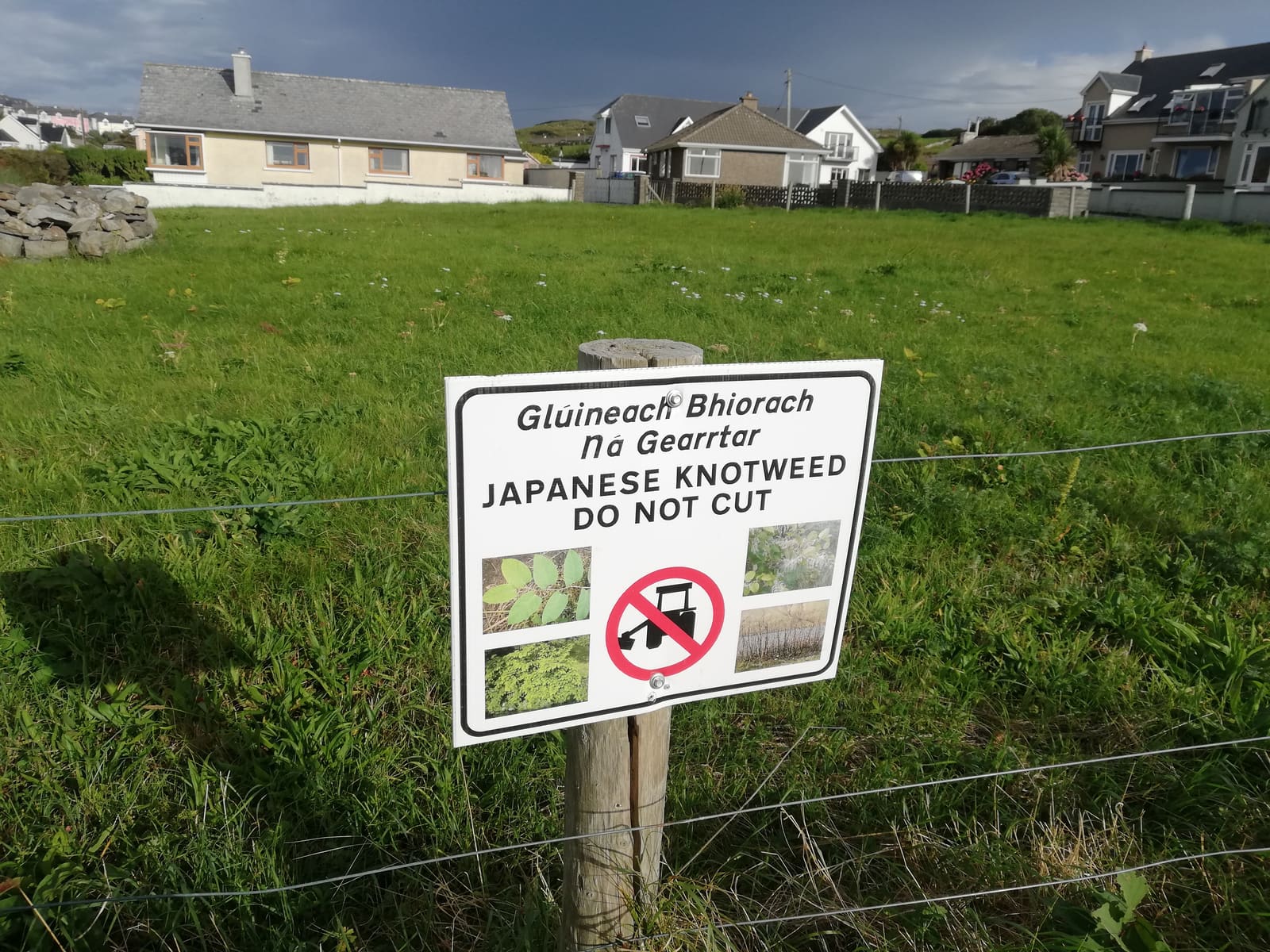
Few property phrases trigger panic like "Japanese knotweed". The reputation is only partly deserved: knotweed is a genuinely invasive plant that is expensive to remove and must be disclosed, but the idea that it demolishes foundations and makes homes unsellable is out of date. Since the RICS updated its professional guidance in 2022, the market has treated knotweed as a manageable defect — more like a roof that needs work than a wrecking ball.
This guide covers how to recognise it season by season, what sellers must tell you, how lenders actually respond, what treatment costs, and the questions to ask before you offer on an affected property.
What knotweed is and why it matters
Japanese knotweed (Reynoutria japonica) is a fast-growing perennial introduced to Britain as an ornamental plant in the nineteenth century. It spreads through underground rhizomes rather than seed, which is why a fragment of root the size of a fingernail can start a new stand — and why digging it out casually tends to make it worse.
It matters to buyers for three practical reasons: sellers must disclose it, some lenders ask for a treatment plan before they will lend, and remediation costs real money. It is not illegal to have knotweed on your land, but it is an offence under the Wildlife and Countryside Act 1981 to cause it to spread into the wild, and soil containing rhizome counts as controlled waste that must go to a licensed facility.
Sources: RHS — Japanese knotweed · GOV.UK — invasive non-native plants
How to spot it, season by season
Knotweed looks completely different in March and in December, which is why winter viewings miss it. The pattern through the year:
Red-purple asparagus-like shoots; growth of up to 10cm a day
Bamboo-like canes 2–3m tall; shield-shaped leaves on zig-zag stems
Tassels of creamy-white flowers — the easiest time to identify
Canes die back to hollow brown sticks; rhizome dormant and invisible
- Check the garden edges, fence lines and any neglected corners — knotweed loves boundaries and disturbed ground.
- Look over the fence too: a stand on a neighbouring garden, railway bank or watercourse within about 3 metres of the boundary is what surveyors now assess.
- Winter viewing? Look for dead brown canes standing in clumps, or patches of ground that look recently cleared for no obvious reason.
The TA6 form: what sellers must tell you
The standard TA6 property information form asks sellers directly whether the property is affected by Japanese knotweed, with three possible answers: Yes, No or Not known. "No" is a strong statement — it asserts there is no knotweed rhizome on the property or within 3 metres of the boundary, including underground. Sellers who tick "No" carelessly and are proven wrong have faced successful misrepresentation claims, so cautious sellers (on their solicitors' advice) increasingly answer "Not known".
For a buyer, the answers translate roughly as: "Yes" means ask for the management-plan paperwork; "Not known" means look carefully and consider a specialist survey if anything seems off; "No" gives you a legal backstop later, but is not a substitute for your own eyes on the boundary.
Why lenders care — and why most still lend
Lenders worry about two things: the cost of remediation and the effect on resale value. The 2022 RICS guidance reset both. It concluded that knotweed rarely causes significant structural damage to substantial buildings — its old reputation for "growing through concrete" was overstated (it exploits existing cracks and weaknesses rather than creating them) — and it replaced the notorious blanket 7-metre rule with a management-based assessment focused on visible growth within 3 metres of the boundary.
The practical upshot: most mainstream lenders will lend on an affected property provided there is a professional management plan in place from a reputable contractor, backed by an insurance-backed guarantee (IBG) that survives if the contractor goes bust and transfers to future owners. An affected home without a plan is a negotiation point; one with a solid transferable plan is, for most lenders, business as usual.
What treatment actually costs
There are two mainstream approaches. Herbicide treatment programmes run over several growing seasons (typically three to five years) with monitoring afterwards; for an ordinary garden stand these commonly cost in the region of £2,000–£5,000 including the survey, the plan and an insurance-backed guarantee. Excavation — physically removing the rhizome and disposing of the soil as controlled waste — is faster but far more expensive, often £5,000–£20,000 or more depending on the extent.
Because a management plan is a genuine upfront cost, treat it like any other purchase cost: get a specialist quote during conveyancing and either ask the seller to commission the plan before exchange or reflect the cost in your offer. It sits alongside your survey, legal and moving costs in the overall budget.
Fee bands are typical 2026/27 figures and vary by firm, property and region; leasehold purchases usually add a few hundred pounds of extra legal work. Illustration only.
Myths vs the 2022 RICS position
A short honesty check on the folklore:
- Myth: knotweed destroys foundations. RICS 2022: serious structural damage to substantial buildings is rare; knotweed is comparable to other vigorous plants in what it does to hard surfaces.
- Myth: a home with knotweed is unmortgageable. Reality: most lenders lend with a management plan and insurance-backed guarantee in place.
- Myth: if it is 7 metres away it is automatically a problem. Reality: the 7m rule was retired in 2022; assessment now centres on visible knotweed within 3m of the boundary and on management, not distance alone.
- Myth: you can dig it out yourself over a weekend. Reality: fragments regrow, and soil containing rhizome is controlled waste — DIY removal usually spreads the problem and can create legal liability.
- Not a myth: knotweed can still knock something off the price. Even treated, some valuers apply a modest diminution — which is exactly why the paperwork trail matters at resale.
Questions to ask before you offer
If knotweed is present or suspected, these five questions cover most of the risk:
- Is there a professional management plan, who wrote it, and how many treatment seasons remain?
- Is there an insurance-backed guarantee, how long does it run, and does it transfer to buyers?
- Where exactly is (or was) the stand — on this land, or a neighbour's within 3 metres of the boundary?
- Has the seller answered the TA6 knotweed question, and in writing?
- What did the contractor's original survey map show? Ask for a copy — your lender's valuer may want it too.