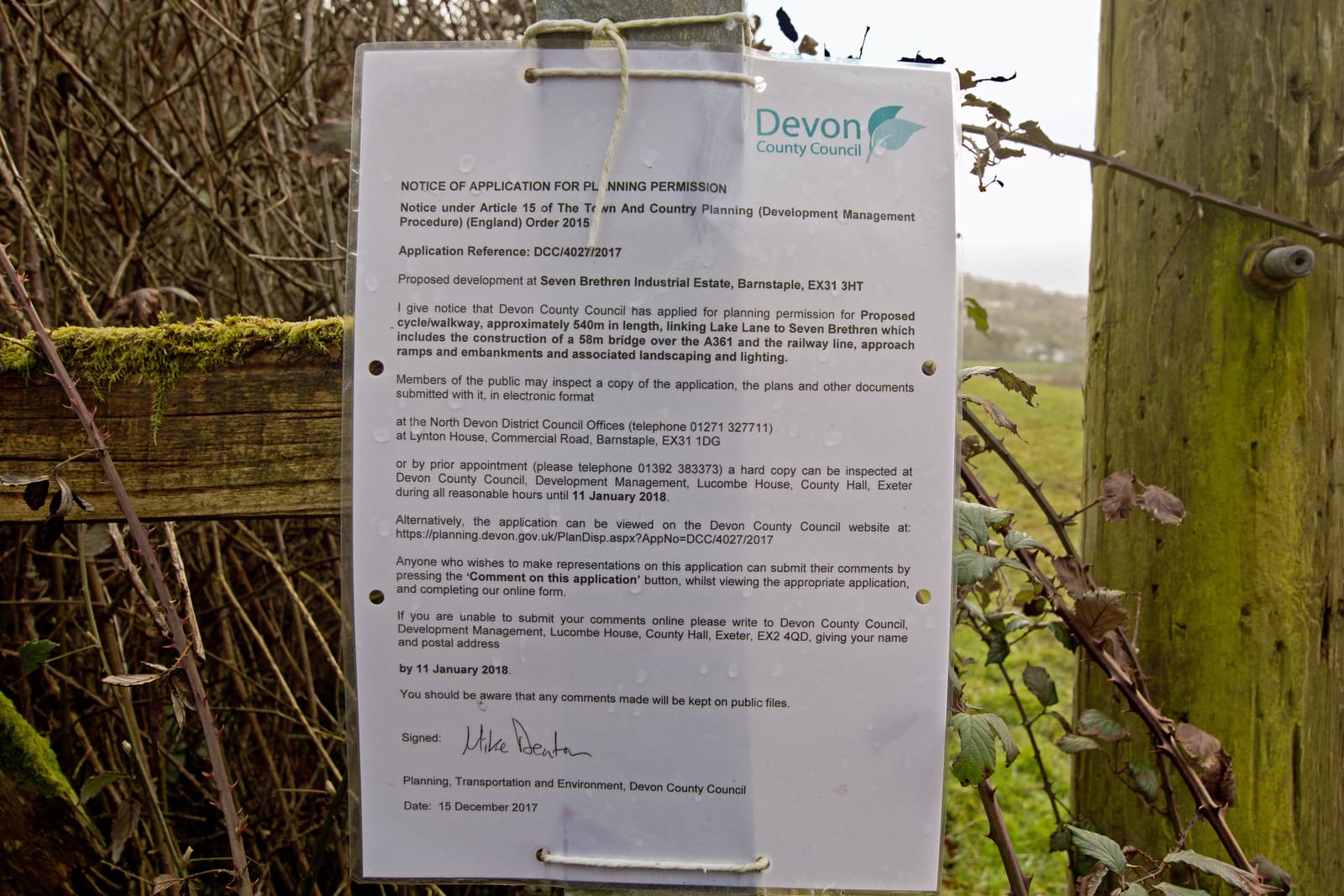
Planning is a two-sided check that most buyers do half of, badly. Side one: has anything been done to this property that needed permission and did not get it — a liability you inherit at completion? Side two: what could be built around you — the neighbour's double-storey extension, the field behind that is allocated for 400 homes?
Everything you need is public and free. This guide shows you how to search it, how to read what you find, and where the traps are.
How to search a council planning portal
Every local planning authority runs a public online register of applications — usually reachable from the council's website under "view planning applications". Search the property's address first, then browse the map view for everything within a couple of hundred metres over the last ten years or so. For each result you can read the plans, the officer's report and the decision notice.
Search wider than the address: the field behind the garden, the pub on the corner, the parade of shops. And check the council's Local Plan — the document that allocates sites for future development — because land allocated for housing today is the planning application of two years' time. The national Planning Portal explains the system and hosts the application process itself; decisions, however, live on each council's own register.
Sources: Planning Portal · GOV.UK — planning permission basics · GOV.UK — find your local council
Reading the property's own planning history
Match what you see on viewings against what the register shows. An extension, loft conversion with dormer, garage conversion or outbuilding should correspond either to a granted permission, a lawful development certificate, or work that plausibly fits permitted development. Building-regulations sign-off is a separate regime again — a conversion can have planning permission and still lack a completion certificate.
Gaps are common and often innocent, but they are the buyer's problem to resolve before exchange, not after. Your conveyancer's local authority search will flag permissions, refusals, enforcement and building-regs history for the property itself — but only for that property, which is why the do-it-yourself portal search of the surrounding area matters.
- Granted permission: read the conditions — some (obscured glazing, no further extensions, occupancy restrictions) bind you forever.
- Refused application on the property: read the refusal reasons. They tell you exactly what you will not be allowed to do either.
- Withdrawn applications: often a sign the applicant saw a refusal coming — the officer's comments are still on file.
- No paperwork for obvious works: ask the seller for a lawful development certificate or indemnity insurance, and get your solicitor's advice before exchange.
Permitted development: what needs no permission at all
A surprising amount of building work needs no planning application, because the General Permitted Development Order grants blanket rights for defined works: single-storey rear extensions (up to 4m for detached houses, 3m otherwise, or up to 8m/6m under the prior-approval route), loft conversions up to a volume cap, outbuildings covering up to half the garden, and more, each hedged with height, coverage and location conditions.
This cuts both ways. It means your plans for a modest extension may need no permission — but it also means the neighbour's can appear with no application for you to object to. Two caveats: permitted development rights are reduced or removed in conservation areas and other designated land, can be stripped by an Article 4 direction or by a condition on the estate's original permission, and do not exist at all for flats and maisonettes. Never assume PD applies — check.
What a live application near you actually means
If you find a current application next door mid-purchase, the process runs to a rhythm — and you can take part in it even before you own the house (your offer gives you a legitimate interest, and anyone may comment).
Application appears on the public register
Letters to adjoining owners; 21 days to comment
Site visit, policy check, consultee responses
8-week statutory target for householder applications
Refused applicants can appeal — householder appeals within 12 weeks
Enforcement: the trap that transfers to you
Planning breaches attach to the land, not the person who committed them. Buy a house with an unauthorised extension and the council's enforcement powers now point at you. The time limits changed recently and matter: for breaches in England committed from 25 April 2024, the council has ten years to act (previously four years for unauthorised building works); in Wales the four-year rule for operational development still applies. Older breaches that survived their original time limit are immune — a lawful development certificate is the clean way to prove it.
Listed buildings are the extreme case: unauthorised works to a listed building are a criminal offence with no time limit at all. If the survey or your own eyes find works with no paperwork, the options are a retrospective application, a lawful development certificate, indemnity insurance (which pays out on enforcement loss but does not make the works lawful), or a price adjustment — your solicitor will steer, but only if you surface it before exchange.
A buyer's planning checklist
Half a day on this list covers the large majority of planning risk:
- Search the council register for the address and everything within ~200m over the last 10 years; read decision notices, not just headlines.
- Check the Local Plan for site allocations behind, beside and opposite — fields especially.
- Reconcile every visible alteration with permissions, certificates or credible permitted development; ask the seller to fill gaps in writing.
- Ask whether an Article 4 direction, restrictive conditions or conservation-area status limit what you (or neighbours) can do.
- If you are buying to extend, get informal pre-application advice or at least read refusals on similar nearby schemes before you commit.
- Factor the paperwork risk into your budget alongside survey and legal costs.