Energy retrofit is where good intentions meet hard arithmetic. Some measures pay for themselves in two winters; others take decades and are really comfort or carbon purchases wearing a savings costume. Both can be worth doing — but you should know which is which before you spend, and ideally before you even buy the house, because the cost of getting a home from EPC band E to band C belongs in your offer price.
Numbers below are realistic 2026/27 ranges for typical homes; your survey, quotes and the property's EPC recommendations will sharpen them for a specific address.
Fabric first: the order of works that saves money
The retrofit industry's one commandment is "fabric first": reduce the heat the building loses before changing how you generate it. The logic is financial as much as thermal — insulation is cheap and lasts essentially forever, while heating systems are expensive and last 15–20 years. Insulating first also means any future heat pump can be smaller and cheaper, and will run more efficiently.
The practical order for most homes: draughtproofing and loft insulation top-up first (cheapest, fastest payback), then cavity wall insulation where the house has unfilled cavities, then heating controls, then glazing and floors, then the heating system itself, with solar PV as a parallel track. Solid-wall insulation — internal or external — is the expensive outlier: transformative for pre-1920s homes but at costs that push payback out decades, so treat it as a comfort-and-value decision, not a savings play.
Sources: GOV.UK — improve your home's energy efficiency · Energy Saving Trust
What things cost and what they save
Illustrative simple paybacks for a typical three-bed semi on a gas boiler, using 2026/27 price levels — real numbers vary with the house, the installer and the tariff:
- Loft top-up to 270mm: often £500–£1,000 done professionally, saving £150–£250 a year — the best deal in the building.
- Cavity wall insulation: typically £1,000–£3,000, saving £150–£300 a year in a semi.
- Solar PV: around £5,000–£8,000 installed for ~4kWp, saving £400–£700 a year depending on usage and export payments.
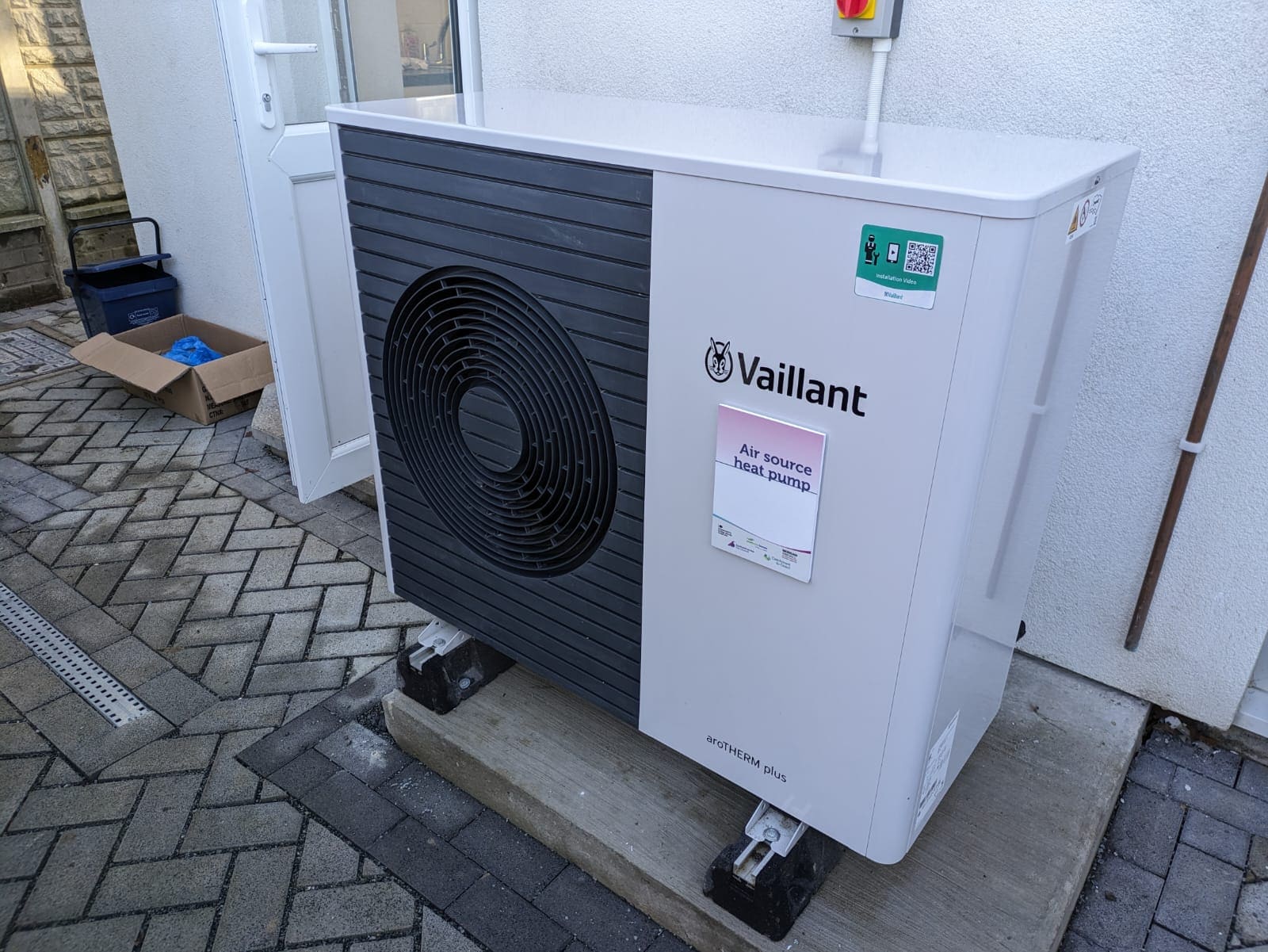
- Air-source heat pump: commonly £10,000–£15,000 installed before support; the grant (next section) changes the sums materially.
The Boiler Upgrade Scheme and other help
The Boiler Upgrade Scheme (England and Wales) pays a £7,500 grant towards an air-source or ground-source heat pump, claimed by your MCS-certified installer and deducted straight from the quote — turning a £13,000 installation into £5,500. The scheme is funded to run to 2028 on current plans; eligibility rules (including the previous requirement to have no outstanding loft/cavity insulation recommendations, dropped in 2024) have loosened over time, but check the current position when you apply.
Lower-income and low-EPC households may qualify for deeper support through ECO4 or the Great British Insulation Scheme, and from 2026/27 the government's Warm Homes Plan is expanding grant and low-cost-finance routes — worth checking before self-funding anything major. One more budget line has gone: VAT on energy-saving materials (insulation, heat pumps, solar) is zero-rated until March 2027.
Sources: GOV.UK — apply for the Boiler Upgrade Scheme · GOV.UK — Great British Insulation Scheme
Heat pumps honestly: when the sums work
A well-installed heat pump delivers three-plus units of heat per unit of electricity, but electricity costs roughly four times what gas does per unit — which is why replacing a modern gas boiler saves less money than the efficiency figures suggest. Against old electric storage heaters, oil or LPG, the savings are large and the case is straightforward; against a recent gas combi, the running-cost case depends on a quality installation (low flow temperatures, right-sized emitters) and increasingly on heat-pump-specific electricity tariffs, which can tilt the equation meaningfully.
The honest framing: with the £7,500 grant, a heat pump is close to cost-parity with a boiler replacement at install time, future-proofs the home, and cuts carbon dramatically — but as a pure money-saving investment against mains gas, payback is long and tariff-dependent. Run your own numbers:
Simple payback — real savings vary with your usage, energy prices and how well the work is done, and this ignores grants, comfort gains and any effect on the home's value.
What retrofit does to the EPC — and why that is changing
EPC ratings run A to G on points scored primarily against modelled running costs. Insulation reliably moves the score: loft and cavity work plus draughtproofing typically lift a home several points, often one band. Heat pumps historically scored oddly — because electricity is priced high in the methodology, a heat pump could barely improve (or even dent) a rating despite slashing carbon. That is being fixed: assessment methodology was updated in mid-2025, and a broader EPC reform introducing multiple headline metrics is scheduled from 2026 — so treat any pre-2025 EPC's recommendations as a starting point, not gospel.
The band matters beyond bragging rights: it feeds running-cost estimates, increasingly mortgage products ("green" rates for A–C homes), and — if you ever let the property — proposed minimum-standard rules (currently EPC E, with a government proposal to require C for rentals around 2030, not yet law as of mid-2026).
Typical yearly heating & power for a 3-bed home at 2025 prices — the gap between a C and an F is real money every single year.
Buying a low-EPC home: price the gap
None of this is a reason to avoid an E-rated house — it is a reason to price it correctly. The EPC certificate (free to look up for any address) includes a recommendations list with indicative costs; treat it as a rough scope of works, get one or two real quotes during conveyancing for the big items, and set your offer with the retrofit bill in view. A £12,000 gap to comfortable is only a problem if you discover it after completion.
And if you are choosing between two similar homes, compare their EPCs like-for-like: the D-rated house with a filled cavity and a newer boiler may be thousands of pounds "cheaper to buy" than its price suggests against an F-rated twin.
Sources: GOV.UK — find an energy certificate