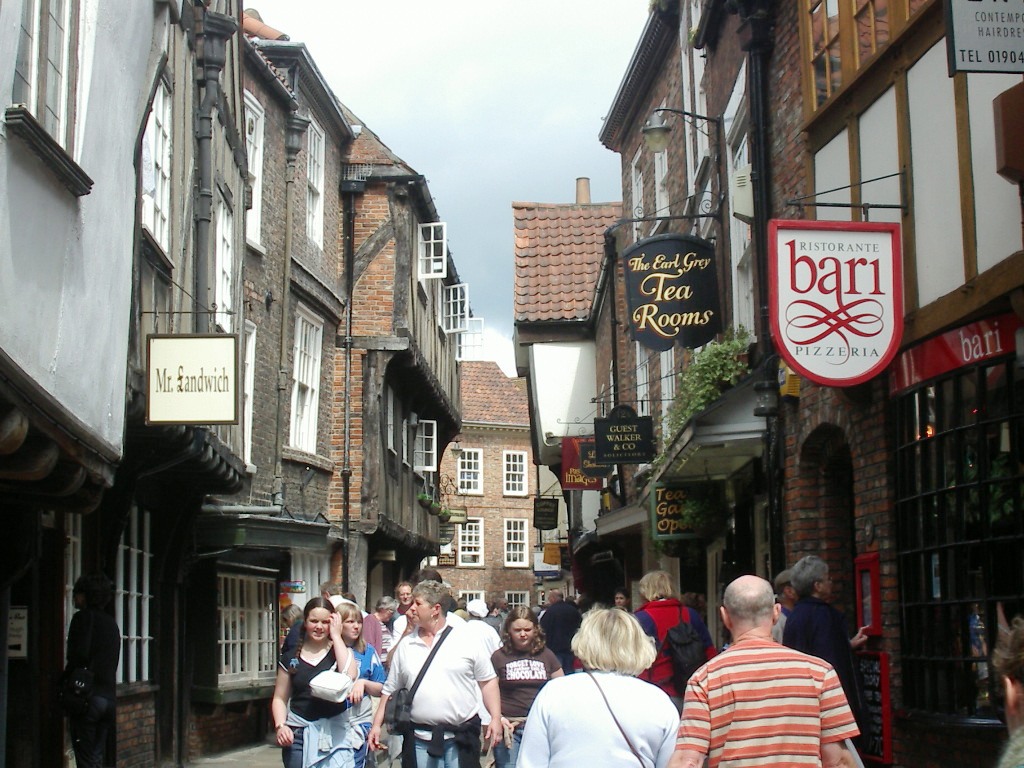

York: the heritage premium takes a breath
England’s best-preserved city spent a decade repricing on charm, rail links and scarcity. The latest year — the first negative one in our record — makes it a rare thing in the north: a buyer’s market with a moat.
Written by Housometer · audited against HM Land Registry data, July 2026 · tables update automatically
The shape of the market
York trades at a £304,000 median — a solid third above Manchester — on strikingly thin volume: 13,400 sales in three years, barely a third of Bristol’s count. That scarcity is structural. The walls, the conservation areas and the green belt cap what can ever be built, and it shows in the mix: just 13.8% of sales are leasehold (this is emphatically a house city), and one sale in ten is a new build, mostly on the northern edge.
The growth story has gone quiet. After +37.5% over the decade, the last five years managed +6.4% and the latest twelve months −2.1% — the first genuinely negative year in our York record. The post-pandemic rush for walkable heritage cities has washed through; what’s left is a market priced for its setting, taking a breath.
Where prices are actually moving
York is one of the few cities where the movement story is best told street by street (its districts are too intertwined for a clean league table — and note that the Land Registry’s “York” reaches well into the surrounding villages). The standout riser inside the city is Fulford Road (YO10), where the recent five-year window of sales carries a median around £800,000 — 171% above the previous window, a shift powered by which homes came to market as much as by pure price growth. The softest entries are village closes on the rural fringe, where a run of smaller sales can halve a median. Read all small-street swings here as evidence to investigate, not verdicts.
The streets at the top
Nowhere else in the north does the top of a street table look like this. The Purey Cust — a cathedral close in the literal shadow of the Minster — heads the city at a £1.5m median, including York’s record recorded sale at £5.1m. Peckitt Street, facing Clifford’s Tower, and the Georgian frontages of Bootham and Clifton (YO30) fill out the top five. York’s premium is heritage itself: the priciest streets are the ones the tourists photograph.
Where to live: an honest guide
Seven areas we’d shortlist, from inside the walls to the family villages north of the ring road — with the district median beside each.
A £305,500 median covers everything from compact flats over shops to The Purey Cust’s once-a-decade sales. Stock is scarce, often listed, and short-lease flats do appear — the legal checks matter as much as the survey. Tourist-season footfall is the honest trade-off.
The highest district median in the city (£365,500) tells you what York buyers now prize: walkable terraces, Rowntree Park, and a proper local high street. Victorian two- and three-beds dominate; competition for the best streets is the fiercest in York.
Fulford Road’s big houses drive the headlines (and the movers table); behind them sit sensible interwar semis at a £295,000 district median. Student lets cluster nearer Heslington — check the street’s tenure mix if you want owner-occupier quiet.
York’s biggest-volume district (£285,000 median) spans grand and modest: Mount Vale Gardens and The Horseshoe both make the citywide street table, while Holgate offers the best-value period terraces this close to the station.
Bootham and Clifton themselves anchor the city’s street table (£975,000 and £885,000 medians); the wider district trades at £295,000. Parts sit low near the Ouse — the 2015 floods ran close here, so make the flood check non-negotiable.
A £285,000 median makes Heworth the value pick among York’s walkable inner districts, and The Groves’ low-traffic experiment made it quieter still. The Foss is the waterway to respect in a downpour.
At a £315,000 median you trade period character for space, parking and catchments; one in ten York sales is a new build and plenty land here. The promised Haxby rail station would change the commuting maths if it finally arrives.
The Housometer read
York is that rarity: a supply-capped heritage market in a soft patch. The −2.1% year won’t last forever in a city that physically cannot add streets, so the current window favours patient buyers — especially for the walkable inner districts where competition normally decides everything. Two checks are close to mandatory here: flood risk (the Ouse and Foss have form, the risk is plot-specific, and it prices into insurance) and conservation-area or listed-building constraints, which govern what you can ever change. Our report runs both, plus the street’s own sale history, for any address in the city.
Found a street you like? Check the actual home.
A Housometer report runs every check in this article — value against the street’s own sales, flood and ground risk, crime, schools, noise, planning and tenure — for any York address.
Free Home Confidence Score first · full report £5 · 14-day no-quibble refund
Figures from HM Land Registry Price Paid Data (© Crown copyright, OGL v3.0), analysed by Housometer; street £/m² joins EPC floor areas (MHCLG). Tables refresh automatically as sales are registered; the commentary was written July 2026 and is guidance, not advice. The Land Registry’s “York” town field extends beyond the council boundary into its postal hinterland. Photo: John M Wheatley · CC BY-SA 2.0.