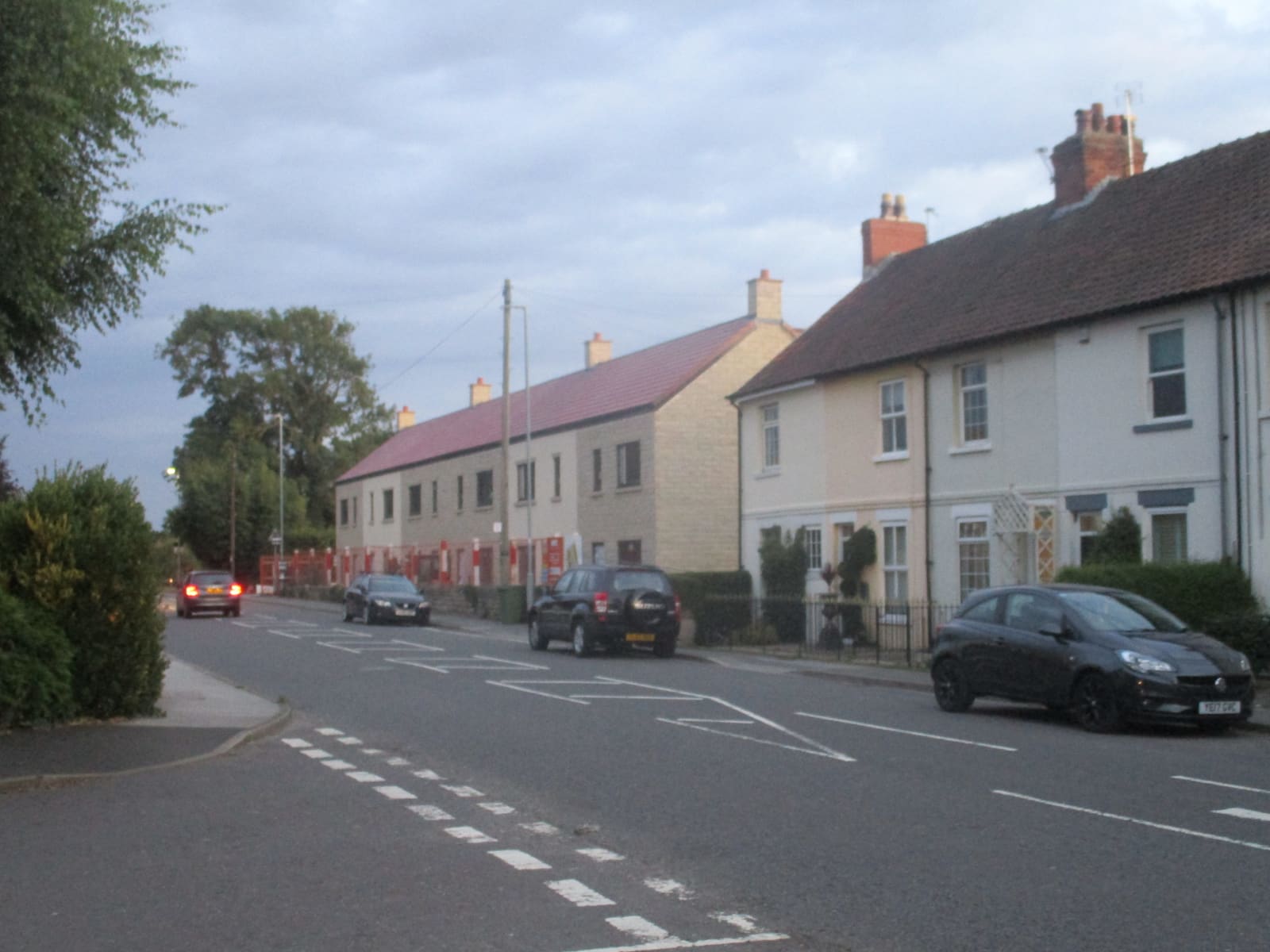
New build or old? It is partly taste — some people want a blank canvas, others want cornicing — but underneath the taste question sit hard financial differences: a price premium on new homes, opposite maintenance profiles, different tenure and charge structures, and warranties that cover less than buyers assume.
This guide takes the two options seriously rather than cheering for either: what the new-build premium is and why it exists, how snagging and the 10-year warranty actually work, the estate-charge problem the industry calls "fleecehold", and what buying seventy-plus years of character really costs to run.
The new-build premium — and its first-owner depreciation
New homes sell at a premium over comparable existing homes — commonly estimated at around 10–15%, varying with region and market conditions. Some of it buys real value: modern insulation, a warranty, no chain, no refurbishment. Some of it is the "new" itself — and like a new car, that part fades the day you move in. It is common for a new build to be worth little more, and sometimes less, than its purchase price for the first few years, while the surrounding market grows into the premium.
The practical consequences: negotiate (developers protect headline prices but routinely move on extras, upgrades and contributions — especially near their year-end); be careful with small deposits, since early resale after a market dip can leave you owing more than the home is worth; and value the plot against local sold prices for existing homes, not against the developer’s price list. Incentives worth more than about 5% of the price must be disclosed to the lender and can reduce its valuation.
Snagging: the inspection that replaces the survey
A full structural survey makes little sense on an unbuilt or just-built home; what replaces it is a snagging inspection — a specialist’s sweep for defects, from cosmetic (paint, sealant, scratched glazing) to serious (ventilation, drainage, roof detailing, out-of-tolerance walls). Professional snagging inspections typically cost £300–£600 and routinely find dozens to a few hundred snags; developers fix legitimate snags fastest while completion money is still in motion, so timing matters.
Commission it, if the developer permits access, just before legal completion — or as soon after moving in as possible. Keep everything in writing, photograph everything, and use the two-year builder-warranty window (below) deliberately: a documented snag list submitted early beats a phone call in month twenty-three.
What the 10-year warranty actually covers
Nearly all new homes carry a 10-year structural warranty — most commonly NHBC’s Buildmark, with ICW, LABC Warranty, Premier Guarantee and others covering the rest of the market. The shape is standard: for the first two years the builder must fix defects arising from failures to meet the warranty body’s standards; for years three to ten, the policy becomes structural insurance only — foundations, load-bearing walls, roof structure — with cosmetic issues, wear and tear, condensation and minor defects excluded.
The gap between what buyers assume ("everything is covered for ten years") and what the policy says (structure only, after year two) is where most warranty disappointment lives. Since 2022 the industry has also had a New Homes Ombudsman covering complaints against registered developers in the first two years — free to use, and worth knowing about before a dispute rather than during one.
"Fleecehold": the estate-charge problem, honestly
Many modern estates are built with roads, green spaces and drainage that are never adopted by the council. Instead, every home — including freehold houses — pays an estate management charge to a private company, typically a few hundred pounds a year and rising. Campaigners call it "fleecehold", and the grievances are structural: owners historically had weaker rights to challenge these charges than leaseholders, no control over the management company, and fees layered on for the paperwork when selling.
The Leasehold and Freehold Reform Act 2024 legislated new rights for estate-charge payers — transparency and the ability to challenge reasonableness — but, as of mid-2026, key provisions were still awaiting commencement, so do not buy assuming the protections are live; ask your solicitor for the current position. Before offering on any estate home: get the management company’s name, the current charge, its history of increases, and the transfer (TP1) obligations. The Leasehold Advisory Service advises on the related leasehold questions free of charge. New-build flats remain leasehold — lease length, ground rent (a peppercorn on leases granted since June 2022) and service charges all still apply.
Sources: Leasehold Advisory Service · GOV.UK — leasehold and freehold reform · New Homes Ombudsman Service
The case for old: what period homes give and take
Older homes counter with space and substance: bigger plots, higher ceilings, established streets and schools, architecture that new estates rarely match — and a price that has already found its market level, with no premium to depreciate through. They are also known quantities: a 120-year-old house has revealed its faults, and a good Level 3 survey can read its whole history.
The take side is running and fixing costs. Solid walls, older roofs and draughty sashes mean poorer energy performance; maintenance runs above the ~1%-a-year planning average that suits newer stock; and alterations can trip conservation-area or listed-building rules. None of this is a reason to avoid period homes — it is a reason to price them properly: survey thoroughly, budget honestly, and treat an attractive asking price on a tired period house as the start of the sum, not the end.
Running costs: the clearest financial difference
Energy is where new builds genuinely earn back some premium. Most new homes achieve EPC band A or B, while the bulk of existing UK stock sits around band D — a gap commonly worth several hundred pounds a year, and more in a large detached home or a hard-to-heat solid-wall terrace. Add the first warranty-covered decade of minimal maintenance, and a new build’s total cost of ownership can undercut a cheaper-to-buy older home for years.
Set against that: estate or service charges (rising, and forever), and the premium itself, which is capital you could otherwise invest — plus the fact that an older home’s efficiency can be bought with insulation and a heat-pump upgrade, while a new build’s charges cannot be renovated away. Use the calculator below to rough out annual running costs for any home you are weighing, and see our EPC guide for which efficiency upgrades actually pay back.
Illustrative only: energy figures are band-typical for an average 3-bed and swing with usage and prices; council tax uses the England Band D average (~£2,392 for 2026/27) scaled by the statutory ninths — your council will differ. Excludes water, broadband, insurance and maintenance.